Monday, May 22, 2017

Food, Human rights and vermont farms

Many people have thought of food as being a human rights issue, yet we often have over look the quality of the food we eat consume and just focus on quantity and how it is being distributed. The most unhealthy food in the country is currently the least expensive. It is a good thing that mass produced food specifically meat can be easy to access for struggling people in this country. With this being said, it’s far harder to find meat from grass fed cows on family owned farms than it ever should be. Cows are being put in conditions where they are fed a purely corn based diet living in an intensely crowded indoor shelter where they live their entire lives and never spend time outdoors. This is not only unhealthy for the livestock  but it’s also unhealthy for the consumer. Companies use these methods because they are inexpensive and systematic ways of controlling their product.
Image result for Cow farms
When every cow that comes from a company is being processed in the same place and the meat is being cut in the same spot you run the risk of having a dangerous disease that was evident in one cow spread to the rest, which is incredibly dangerous to the consumers. You run a high risk in food poisoning when mass producing something as delicate as meat.       
Image result for beef processing
To learn more about this subject I visited different farms in the southern vermont area and had conversations with different farmers on this subject and gathered information on the topic. There are many people that work at my school who work on farms and were able to give me various opinions on the modernisation of farms and the high demand of meat in a globalizing world. The goal of this project is to promote the consumption of meat from grass fed beef cows that come from small farms. I hope to see more people buying from local family owned farms that use humane methods to raise their cattle, this not only be helpful to the beef cows but it will also put your money towards individuals that own the farms instead of the owners of big name brands.

Friday, April 15, 2016

Just yesterday I was with my wilderness skills group, a group specifically for home schooled kids when some of us decided to take a couple minutes to look under rotting logs for salamanders. It was our lucky day because we found some of the most colorful and rare salamanders that live in Connecticut. After first finding some of the northern red backed salamanders we did a little more searching and uncovered the spotted salamander. The spotted salamander is about four inches long and has bright yellow spots to contrast is dark brown body. We kept searching and latter found a blue spotted salamander, it is short and has tiny blue spots all over its body. The week before this I found a young red spotted newt, it's bright orange body really shows against the dark colors of the leaves and dirt. I had a awesome time finding some of the local salamanders and I cant wait for the next chance I get.  


Tuesday, April 5, 2016

Recently I been designing a house as a home schooling project. Thanks to the help of my parents who are both architects I have drawn up a floor plan and I have recently finished drawing the house in elevation. There have been some challenges along the way, but it has been a really interesting experience. Managing to fit the rooms into the house and adjusting them can be difficult. By making one room a little bit bigger, or smaller, you then must adjust any room or part of the house next to it. It can feel like putting together a puzzle sometimes but in the end I found that I was very pleased with the outcome. After drawing my house in elevation my father helped me to change my plans to look like a modern international style house. This was the truly inspiring moment for me, I was able to adjust my house to look like my favorite style of architecture. Soon I will be learning how to draw my house on a computer using a program called sketch-up. It has been a really exiting learning experience for me.  
Here is some more music from one of my bands latest concerts.


Tuesday, March 22, 2016

The floor plan for a house that I am building as a home schooling project. 


Some songs my band did at a church concert. 


A classic song by the rolling stones called wild horses.

Saturday, February 27, 2016

Book Thief and Maus

The Book Thief and Maus are two very different stories. Although they are both Holocaust stories, they do have some major differences. The Book Thief is told through the eyes of a girl, who must deal with living in Nazi Germany, while her foster parents hide a Jewish man in their basement. In Maus, a man must protect his family while Germany invades Poland and it gets harder to live his normal life. In both stories, family is important. The girl named Liesil, in the Book Thief, lives with her foster parents as the war seems to be growing worse around her. Whereas, in Maus the main character has a wife and son that he must protect throughout the war.

        The author of the Book Thief is Markus Zusak; he has won many awards for his writing. After the book thief was released in 2005 in remained on the New York Times bestseller list for 375 weeks. The Book Thief can really blow you away it keeps you on the edge of your seat constantly. You will always be wondering how Liesel Meminger makes the best out of her life as it seems to fall apart around her. In this book you get to see the story of the holocaust from a different point of view than normally found, it story is told with a young girl who is German and does not believe in the ways of Nazi Germany.

       Art Spiegelman is the author of the Pulitzer Prize winning books Maus and Maus II. In Maus you can see the story of the Holocaust written as a graphic novel. In the book it shows you the Jewish Poles as mice and all of the Germans as cats. It is the true story of Art Spiegelman's father and mother surviving in Poland during the rise of Nazi Germany, and through the struggle they took when they were in Auschwitz. In the novel you see Spiegelman going to visit his father and listening to his memories and seeing them in comic form. Both of the Maus books are amazing and definitely worth reading. It is interesting to read about the Holocaust though a graphic novel. This is one of my personal favorite books and I highly recommend reading it.


    In Book Thief and Maus each main character plays a different part in their families. In Maus, Valdek is a father and must not only protect himself but also keep his wife and his son in safe shelters during the war were they will not get found by the Nazis. Even when he and his wife are separated in Auschwitz, he takes jobs as a worker that can get himself closer to seeing his wife and passing her any food that he has found. In the book thief the main character Liesel lives while her family dies, then she goes to live with new foster parents. Different from Valdek in Maus, Liesl lives as a German and must trust her parents during the war and the danger she is put in when they invite a Jewish man to live in their basement.


    Both stories have illustrations in them. In each book the illustrations are very different, Book Thief shows the pages of the books that Max writes for Liesel. These books are about Liesel or Max and they include words to narrate the drawings that Max had made. The way Max made pages was to take the pages of Mein Kampf, a book written by Hitler and paint them white, then write on top of them with a pen or pencil of some kind. Maus also includes illustrations because it is a graphic novel. It is the complete story of Valdek Spiegelman during the Holocaust. This includes some illustrations of what his life is like for Valdek during the time that his son Art Spiegelman (the author) is writing Maus. This includes Valdek explaining every detail of his life during World War II to his son. Art Spiegelman illustrates the Jews as mice and the Nazis as cats in his story. Symbolism is used in both stories, when Max painted over Mein Kampf it symbolized changing Hitler's words and using them as a new book and a gift for Liesel. It is also symbolic the way that Art Spiegelman chose to show the relationship between predator and prey when showing cats attacking mice. Both books use visual art and symbolism to explain their stories but in two very different ways.


    Each story involves different characters living in different places, during the same war. In The Book Thief, Liesel is living in Germany, and in Maus, Valdek Spiegelman is living in Poland, as all of his neighbors and his family are being forced to move into ghettos and eventually into Auschwitz. Liesel lives as a German girl, in a town with many, who follow the ways of Hitler. However, she lives with the secret of hiding a Jewish man in her basement. This is unlike Maus, where Valdek Lives in Poland, a country that was invaded by Germany and must deal with keeping his family safe.  Although in both books each main character lives in a different country and play a different part in the Holocaust, they both have to deal with equally great troubles in such awful time of war.

    
I have had a amazing time reading both of these great books. Each book gives you a different way of looking at the same period in time. I found it interesting to read about the Holocaust from the view of a kid in Nazi Germany and then seeing it through the eyes of someone who lived through the death camps themselves. Through reading these books I was able to do something I don't normally do which is to compare two different books that both are about the same event in time. Both books are definitely worth reading. I found that I was unable to put these books down, and if you have not read these books before then I suggest you do now.

Wednesday, January 27, 2016

Wednesday, January 20, 2016

                             A mandolin drawing in progress. 

Wednesday, January 13, 2016

Penn Station


    I recently watched a documentary of the rise and fall of Penn station. It talked about how Alexander Cassatt brought his dream to life and built the two railways connecting Pennsylvania to New York City. It also talked about the amazing monument that was built for that railroad called Penn Station, and how it was brought to the ground in 1963.

                                                                     FUN FACT!
Did you know that when when building tunnels underneath the Hudson River, they started the tunneling on each side of the river. Then, the tunnels met in the middle. The estimation of where the tunnels would meet was off by only one sixteenth of an inch!   

Friday, January 8, 2016

Show of Shows Review

 Not to long ago, I went on a trip to visit my relatives in Maine. In Portland,there is an art museum. My family and I took a trip to visit that museum, and after looking at all of the artwork; we went to see a movie they were showing. The movie was made up of 11 different, award winning animation shorts. They called this “The Animation Show of Shows." Here, I will talk about three of those shorts. The first film tells the story of  a house's life from its own point of view. The second is about a person, who seeks variation in a world with very little variation. The final short, is about the future and what happens in it.


  One of my personal favorite shorts, “The Ballad of Holland Island House” was noticeably different from the others. Lynn Thomason uses clay art for animation. Every frame is a picture of her clay art. This tells a story of the life of a house, and how the rise of sea levels causes it to sink into the ocean. The story starts when the house is a standing tree. The tree is then used to build this house that shelters a family,but as the sea levels rise the family must abandon the house. For the short time before the house declines to the bottom of the sea the birds take shelter under its roof. The story takes place in the 1800s, so Lynn Thomason decided to use different famous paintings from that time period as scenes in her story. She uses some of the famous paintings done by artists like Winslow Homer. She also draws from Vincent Van Gogh and the way he layers the paint heavily onto the canvas which can clearly be shown through her clay artwork. The story is told from the house's point of view and it is narrated through song. The song is a haunting sea shanty that really gives you a great impression what the house is going through. So many parts of this animated short are wonderful and it clearly is a well crafted story.   

   The next animated short I will tell you about is called “Stripy.” In this story, a man works in a factory, in a big city. The city is huge and the man never sees anything exciting and new. In the factory his job is to paint four black stripes in the each side of a box. The city seems to be filled with black strips and nothing is unique. The man decides that he is going to try and change this by painting squiggly red lines on the sides of boxes. This gets him in a lot of trouble at his job, yet still he continues to paint squiggly red lines. By continuing to do this he gets more people to paint red lines instead of black strips. But soon everyone is painting red lines and that is just as bad as having everyone paint black stripes. In a pursuit for creativity he covers a box in different colors of paint. This way he can see some variation in the city that he lives in. Stripy was made by Babak and Behnoud Nekooei. They are two brothers, who live in the capital of Iran. Just like the main character of “Stripy,” they find that there is very little variation in the city that they live in. They express this well through “Stripy."


   The last short I am going to talk about, really struck me as strange at first. In this story by Don Hertzfeldt, a woman comes through a computer to talk to a young girl. She tells the young girl that in a few years she will give birth to a young clone of herself. The clone still holds all of the memories that the girl, (Emily) has. As multiple generations of clones are born they each carry the memories of multiple life times. The woman is a third generation Emily. Together, they go through the computer and third generation Emily shares memories with the original Emily. Third generation Emily talks about the work she has done throughout her life, the alien pet she adopted, the man she fell in love with and how all of the people are dying and becoming shooting stars in the night sky.  In the few days that she has left, third generation Emily takes a memory from Emily that will comfort her the her final days. This was one of the best shorts and was filled with so much information that it could have been a full movie. This short even had some funny scenes in it, that got a great reaction from the audience. I couldn't have enjoyed it more.

   I had a great visit at the museum and I saw so many great short films. There are many more animated shorts that I would have loved to talk about. I would highly suggest that you go and see some of these films, they were absolutely great.  

Do Our Eyes Grow?

I was visiting The Putney school the other day and I noticed that the calves they keep in the barn have very large eyes. I was curious if their eyes or human eyes grow, or are we born with the same size eye as when we are adults? It turns out that our eyes do grow until adulthood.  


Saturday, January 2, 2016

         The finished product for my self portrait. 

Thursday, December 10, 2015

Monday, November 30, 2015

Edward Tufte Open House

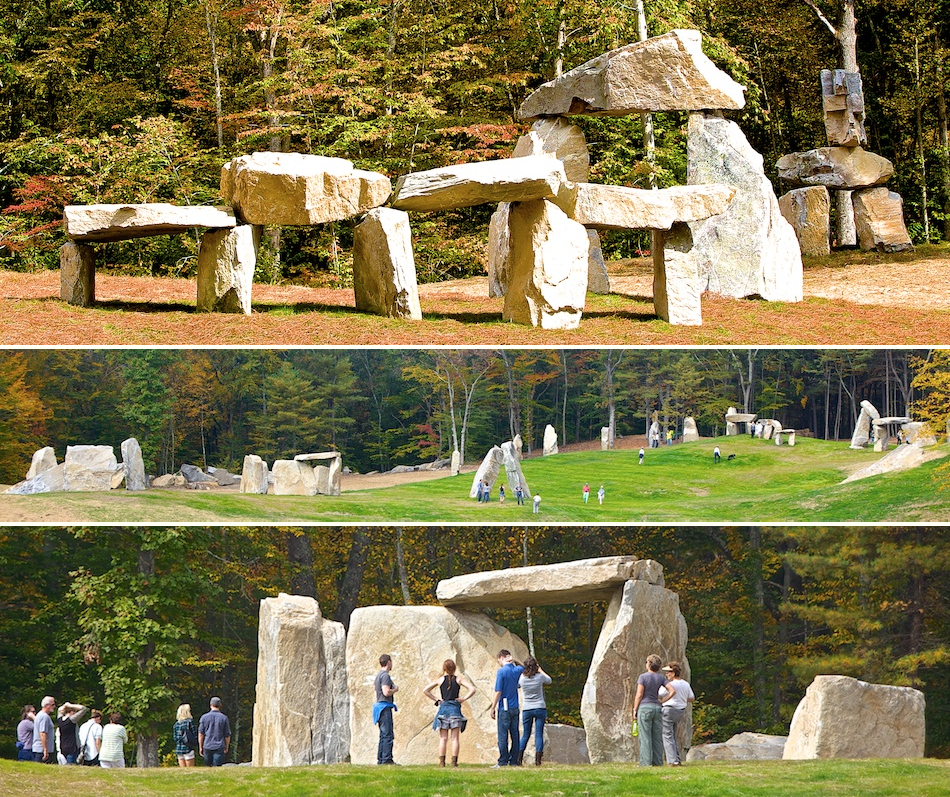
        A little while ago, I got the chance to visit the property that Edward Tufte lives on. Edward Tufte lives on very big piece of private property, that he has dedicated to putting up huge sculptures. Once a year, he opens his property to the public and people can come and admire the art that he created. The land was amazing! There was so much to see that you could never have the time in one day to admire all of the art.
    Inline image
       The first thing we got to see was a sculpture of a gigantic steel fish hanging from a small crane. This sat at the entrance to Edward Tufte's driveway. The driveway was on a seemingly endless hill. There are actually road signs that joke, by reading, "road never ends." When you reach the top of hill you are greeted to the land from Edward Tufte himself.

          After finding a place to park, we started to look around the property. We started off at another hanging metal fish, this one was not hanging down from a crane though; it was hanging from a tree. The hanging fish can be found scattered all around the grounds. After every few statues there is found a hanging fish. 
     Right after the fish, we walked along a rock wall. Each piece of stone along this wall is about ten feet tall, they lean against each other and form a long wall. Down the hill from that we found smaller stone walls that raise a couple feet off the ground. These form a small path way that people can walk along. just past that we were greeted by another hanging fish. After that, there was another stone wall. This wall was much smaller and seemed very delicate. Each piece of rock was put together in the way that it looked as though if you were even to just touch it it would fall apart. Then we came across yet another rock wall very similar to the first, yet this one was up to twice the size and formed its self in a circular pattern.
Inline image
         On the other end of the property you will find the air streams. Tufte puts air stream camper vans on top of long poles that stick diagonally into the air, and he decorates them to look like rocket ships. Edward Tufte used some of the old parts from a nuclear power plant in some of his sculptures. One is a old piece from the power plant that is shaped like a C and you can push it and spins. There is a big lake on his property in front of his small house. In the lake, there is a paddle boat that is shaped like a big swan.
Inline image
        He had so may great sculptures to see on his property. I had a great time and I highly suggest going next year. There is so much art to see and it is truly magnificent.

Meeting Monroe

  I was sitting in the audience at the Grand Ole Opry, just as Bill Monroe and the Bluegrass Boys were ending their concert. I was going to find Monroe, to see if I could audition for his band. I slowly walked out of the Grand Ole Opry, to my car to pick up my instruments. at the back of the auditorium, stood Bill Monroe. A little bit nervous, I came up to him and asked if I could audition to be in his band. He said “sure come on in, backstage.” He had his bass player come and back me up. First, I pulled out my banjo and I played an instrumental he recorded called, Bluegrass Breakdown. Then I played a tune called, Back to the Old Home. After that I brought out my guitar and I sang, Uncle Pen and, Molly and Tenbrooks. He started to give me advice, and tell me what he thought of my playing. His answer as to whether or not he would have me play in his band, was still to be decided.

    I’d love to meet mandolin player, Bill Monroe. Bill Monroe is known as “Father of Bluegrass.” With Earl Scruggs, and his new three finger banjo style, Monroe took old time instruments and used them in his band. No one person stayed in his band for longer than just a few years. Bill Monroe didn't believe that the band should stay with the same members for long, that way it would keep things fresh. People would come up to Monroe after the shows and talk to him about auditioning to be a member in his band. He would give them feedback on what he thought of their style. I would chose to meet Bill Monroe, so I could audition on guitar/vocals and banjo to see what he thought of my playing. I’d be honored to hear what the Father of Bluegrass had to say.  


Sunday, November 22, 2015

Workin' on a Building

This is me with my band the Still River Ramblers, and special guest, Roger Sprung on banjo.


Tuesday, November 10, 2015

Hand-made Clocks

For the past six years, I have made paper mache clocks, as a gift for my dad on Christmas. I start with cardboard shapes and glue paper around them. Then then they are painted, with whichever color and design I choose. A battery powered clock is installed last. The first clock was the candy clock on the far left. I am looking for good  ideas for the next clock, any suggestions?